



Digital Banking Platforms Alone Don’t Drive Engagement—And Spending More Won’t Fix It
Why the platform is table stakes, strategy is the differentiator, and most community FIs have this backwards
Every quarter, I talk to another community bank or credit union that just spent $2 million on a digital banking platform upgrade. The vendor doesn’t matter. They’re all reputable providers with strong capabilities.
They all expected the same outcomes: higher digital adoption, increased member engagement, competitive advantage against neobanks, and growth in primary relationships.
Six months later, they got a cleaner user interface, better mobile performance, and feature parity with larger institutions. What they didn’t get was any measurable change in the metrics that actually matter. Logins stayed flat. Cross-sell didn’t improve. Members didn’t become more engaged.
The platform worked perfectly and changed nothing that mattered.
Technology enables strategy. Technology that doesn’t serve strategy is wasted investment.
01
The Table Stakes Reality
The bottom line, which many people won’t say, is that your members cannot tell the difference between most digital banking platforms in the market today.
They all offer mobile check deposit, bill pay, account transfers, alerts, budgeting tools, and person-to-person payments. The experience is functionally similar. Clean, modern, competent, and largely interchangeable from a member’s perspective.
You spent $2 million upgrading your transaction infrastructure. That’s important. It’s table stakes. But table stakes don’t drive growth. They prevent attrition. There’s a difference.
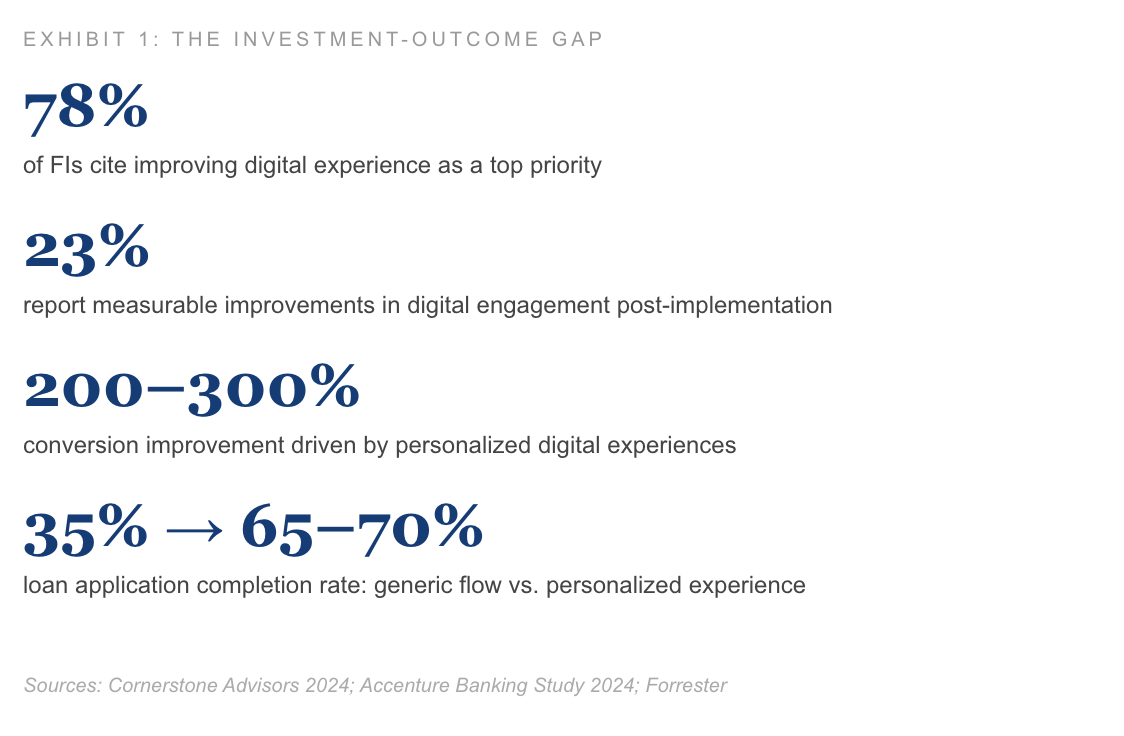
According to Cornerstone Advisors’ 2024 research, 78% of financial institutions cite “improving digital experience” as a top priority, yet only 23% report measurable improvements in digital engagement metrics post-platform implementation. The gap between investment and outcome is real and widening.
What actually drives primary relationship status and engagement? Personalized experiences that feel relevant. Product recommendations that match actual needs, not the FI’s marketing calendar. Content and offers that arrive at the right time. Being treated like an individual, not a segment. The platform provides the foundation. But the foundation alone doesn’t create the experience members are demanding.
02
Questions Nobody Asked Before the RFP
Most banks approach digital banking platforms like this: recognize the current platform is old, decide to modernize, issue an RFP, compare features and pricing, pick a winner, spend 18 months implementing, then wonder why engagement didn’t change.
What should have happened first? Strategy.
Who are you actually targeting?
It should never be everyone. Everyone will be served by the table stakes. Targeting everyone is not a strategy. Small business owners managing cash flow? Young professionals building credit? Retirees protecting assets? Gig economy workers with irregular income? Each needs different capabilities and requires different experiences.
What specific member behaviors are you trying to drive?
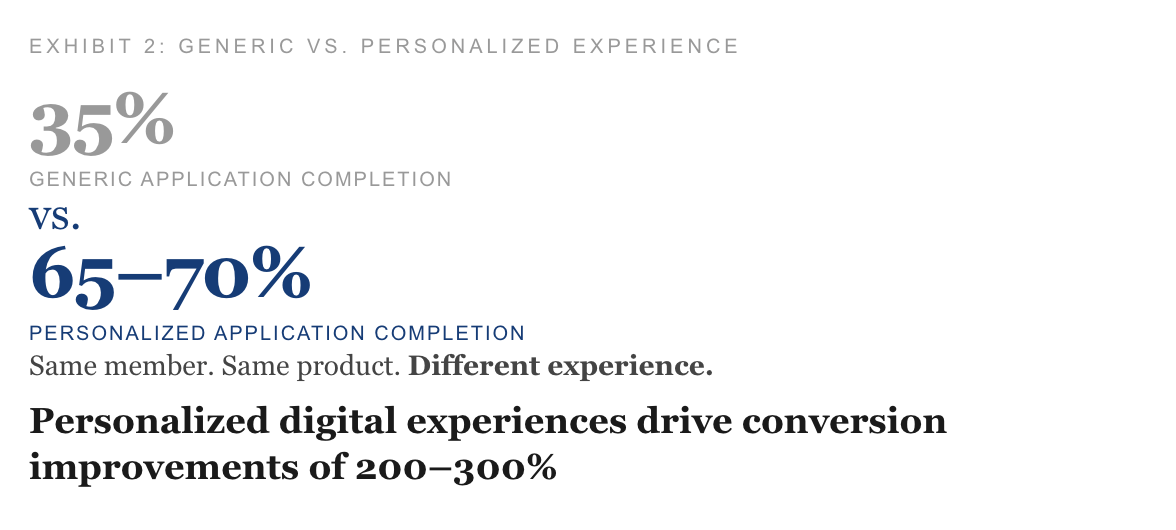
“Engagement” is too vague to be useful. Be specific. Increase login frequency from 2x per month to 8x? Drive savings account balances from $3,000 average to $8,000? Improve loan application completion from 35% to 65%? If you cannot measure it, you don’t have a strategy.
How will you differentiate the experience beyond transactions?
The platform gives you the plumbing. What are you building on top of it? This is where most banks go blank. Some platforms are adding personalization capabilities, but even the most advanced features require strategic intent and data activation to be effective. The technology enables personalization, but strategy drives it.
What does engagement mean for your business model?
Are you trying to deepen existing relationships through cross-sell? Attract new demographics by winning younger members from neobanks? Reduce attrition by keeping members from moving their primary relationship elsewhere? Each requires different capabilities and different approaches to personalization.
If you didn’t answer these questions before you issued the RFP, you’re not buying a platform to enable strategy. You’re buying a platform and hoping strategy emerges. It won’t.
03
Where Differentiation Actually Happens
Digital banking platforms are transaction infrastructure. Necessary but not sufficient.
Think about your technology stack. Your core banking system handles transaction processing and account management. Your digital banking platform provides member access to accounts and transactions post-login. Your public website is where prospects research and where members explore products pre-login. Your account opening system handles applications and onboarding. Each of these touchpoints requires strategic thinking about the member experience. Yet most banks focus 80% of their investment on just one: the post-login platform experience.
But where does engagement and conversion actually happen? Across all of these touchpoints, with particular concentration in two areas most banks underinvest in.
Pre-login: where most conversion decisions get made
Your public website is where prospects research whether to open accounts and where existing members explore additional products like loans, investments, and business accounts. Research from Forrester shows that even existing members spend more time on public websites researching products than inside digital banking exploring those same products. The conversion moment happens before login, not after.
Post-login: where relationships deepen or stagnate
While your digital banking platform handles transactions well, the opportunity for personalized engagement and cross-sell often goes unrealized. Some platforms are building personalization capabilities into their post-login experiences, but implementation requires significant effort, clean data, and clear strategy. Having the feature and using it effectively are very different things.
You invested heavily in the post-login transaction capability but often nothing in the pre-login experience or the data activation required to make post-login personalization work. Yet pre-login is where many members are won or lost, and post-login is where relationships deepen or stagnate.
04
The Missing Layer Most Banks Ignore
Here’s what I’ve learned after three decades in this industry: platforms provide capabilities, but capabilities don’t automatically create experiences.
Your digital banking platform may be able to support personalization. But even the best platform requires you to:
Define your personalization strategy
Prepare and activate your data
Build the logic and rules that drive relevance
Create the content variations
Measure and optimize continuously
Most community FIs lack the resources, expertise, or time to do this well internally. So they either don’t do it at all, or they do it poorly and see minimal results.
The FIs that succeed recognize they need an experience layer that works across their entire digital ecosystem: public website, digital banking platform, mobile app, and marketing channels. This layer activates the data you already have, implements the personalization logic, and delivers relevant experiences at scale. Whether you build this capability internally, partner with specialists, or work with vendors who provide these services alongside their platforms, the point remains: the platform alone won’t drive engagement. Strategy and execution drive engagement. The platform just enables it.
05
What To Do Differently
1. If you are planning to switch platforms soon
Define the strategy before issuing your RFP. Identify who you’re targeting with specific segments, what measurable behaviors you’re trying to drive, and how you’ll differentiate beyond transactions. Map platform capabilities to your strategic requirements rather than comparing feature checklists. Budget for the complete stack: platform cost for transaction infrastructure, experience layer for differentiation, plus integration and implementation costs.
2. If you have no current plans to change platforms
Audit whether your current platforms serve your strategy. Do you even have a clearly defined strategy? Most banks realize they don’t. Accept that the platform provides capabilities, but you need to activate them. Prioritize where differentiation matters most—often pre-login public website conversion and existing member cross-sell—then invest in the experience layer through personalization technology, content strategy aligned to target segments, and data activation.
The institutions winning on digital engagement are not the ones with the most advanced platforms. They are the ones that built strategy first, selected technology to enable it, then built the experience layer that brings it all to life.